
Smarter HR happier teams, faster growth
One dashboard for people data, compliance, insights, and engagement.
What is HRMS?
HRMS (Human Resource Management System) is a comprehensive software that automates HR processes such as recruitment, payroll, attendance, performance, and employee engagement. It helps organizations save time, reduce paperwork, and improve decision-making with real-time insights.
Why is HRMS Important?
An effective HRMS ensures smooth workforce management and empowers HR teams to focus on employee development rather than repetitive tasks. Centralized data improves productivity, compliance, and overall employee satisfaction.
Key Features of an HRMS
- Employee Database Management – Centralized employee details.
- Recruitment & Onboarding – Job postings, applicant tracking, digital onboarding.
- Attendance & Leave Management – Track attendance, leave, and schedules.
- Payroll & Compliance – Automate salary, taxes, and statutory compliance.
- Performance Management – Goal setting, KPI tracking, appraisals.
- Training & Development – Learning programs and certifications.
- Employee Self-Service Portal – Update info, apply leave, download payslips.
- Analytics & Reporting – Custom reports and dashboards.
- Mobile Access – Access anytime via mobile.
Benefits of HRMS
- Reduce manual errors and paperwork
- Increase efficiency and accuracy
- Ensure compliance with laws
- Enhance employee satisfaction
- Improve decision-making with data
"A good HRMS doesn’t just manage data, it empowers people and transforms the workplace."
Conclusion
In today’s fast-paced business environment, an HRMS is essential. It automates repetitive HR tasks, focuses on strategic growth, and creates a more engaged workforce.


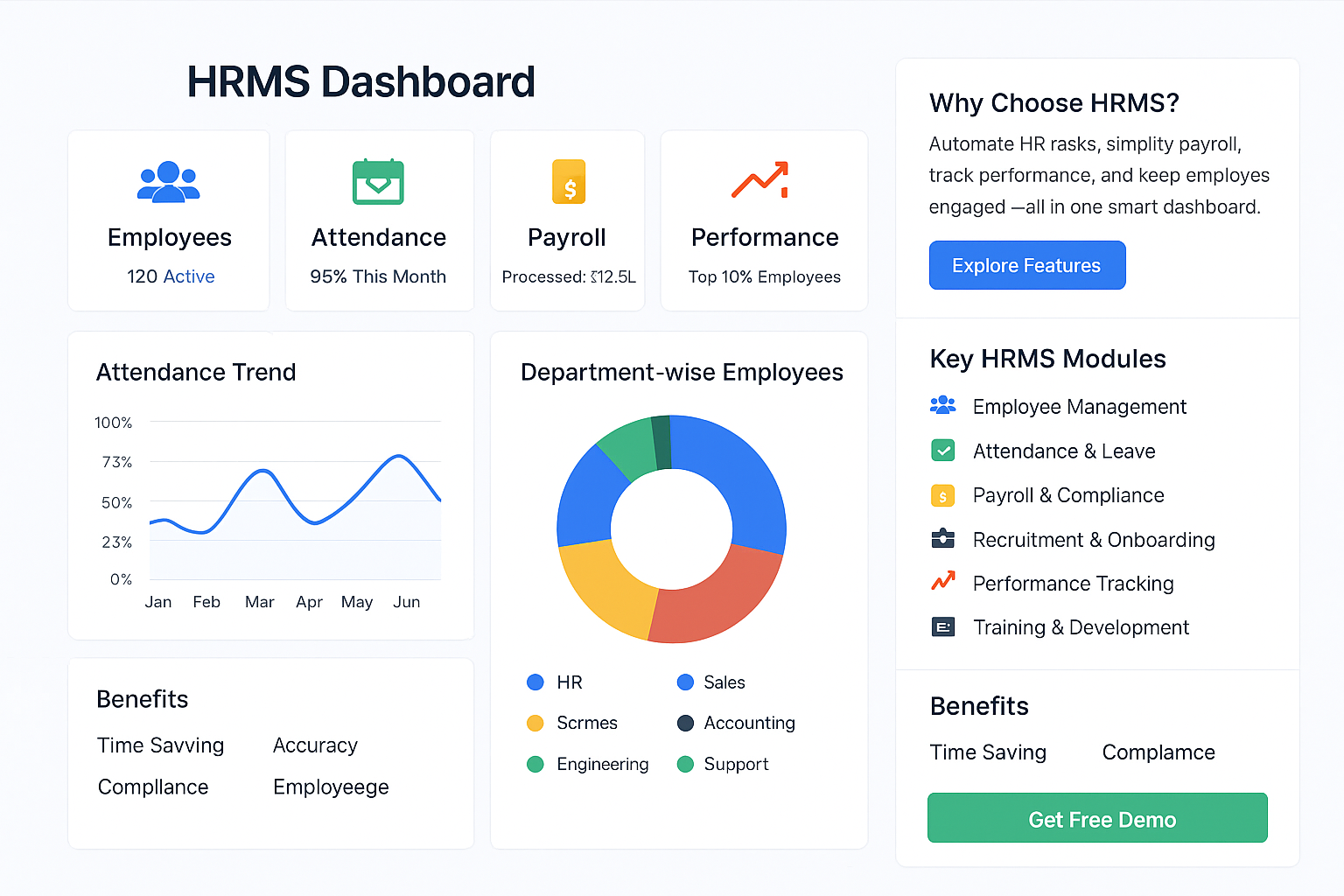
Why Choose HRMS?
Automate HR tasks, simplify payroll, track performance, and keep employees engaged – all in one smart dashboard.
Key HRMS Modules
- Employee Management
- Attendance & Leave
- Payroll & Compliance
- Recruitment & Onboarding
- Performance Tracking
- Training & Development